History

Dry Creek Airport · Est. 1969

Download Full History (PDF)

1969
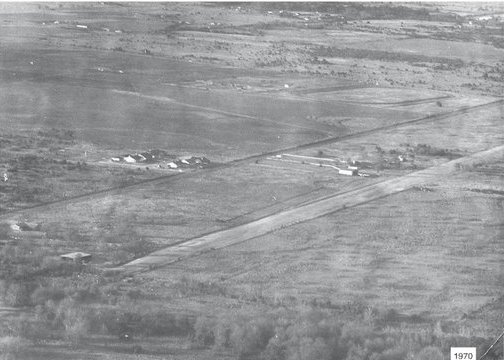
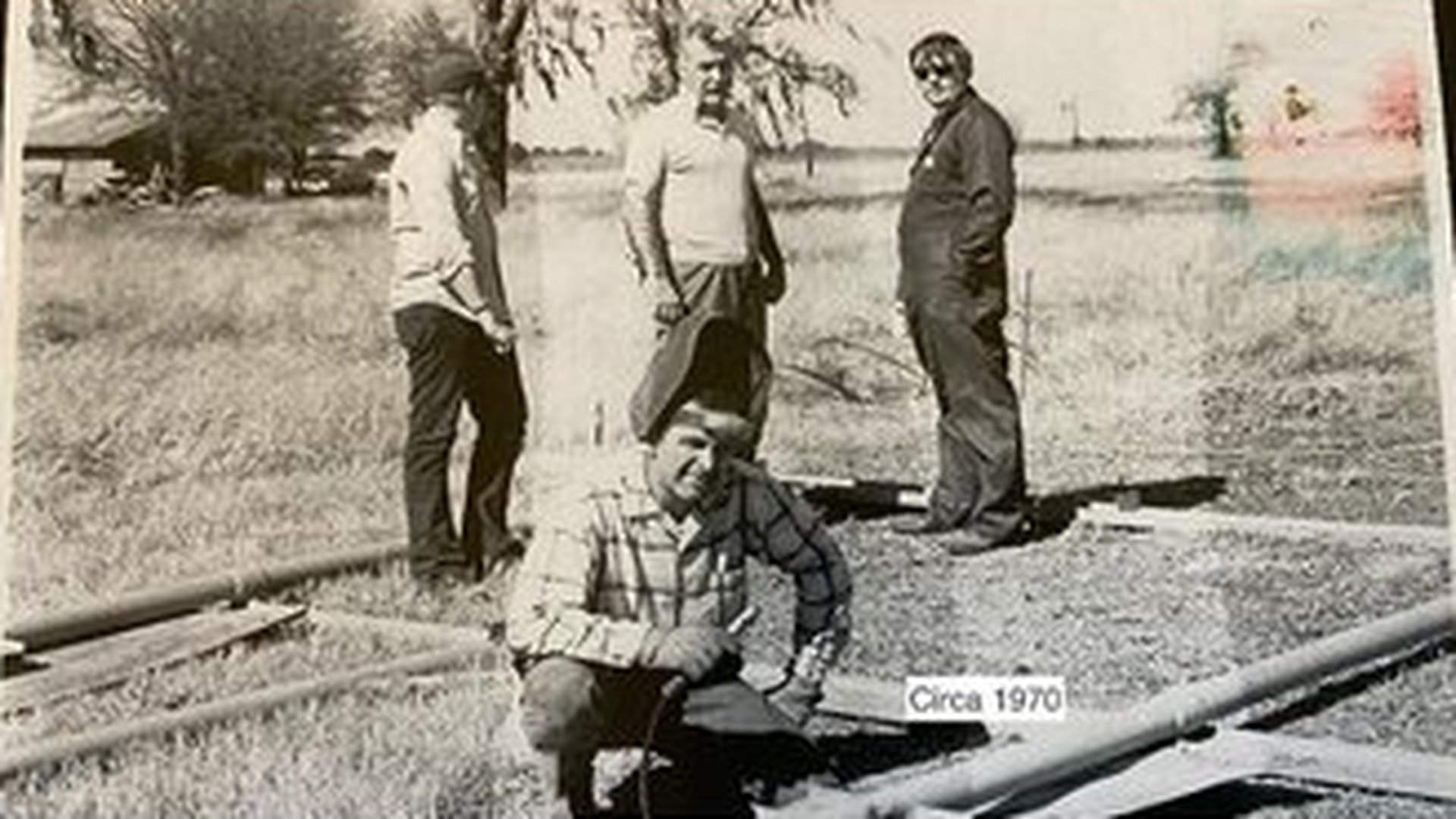
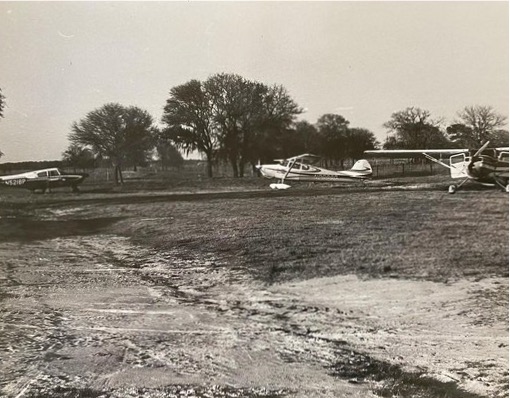
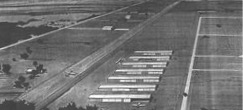
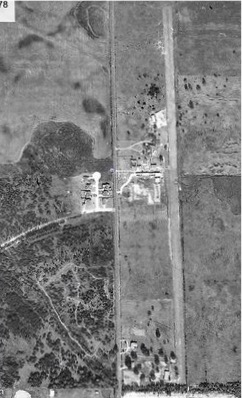
1969–1971 — The Beginning
  • Airport founded by Cleo Bickford and John Kane, who purchased adjacent lots in October 1969
  • Dry Creek receives FAA approval as a private airport on February 18, 1970
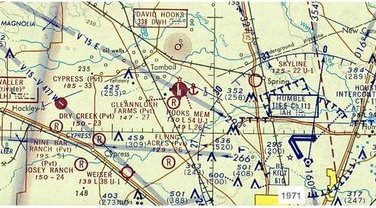
  • Dry Creek added to the 1971 Houston Aeronautical Sectional Chart
1969-1971

1969-1971 a

1969-1971 b

1969-1971 c

1972
1972–1974 — Early Growth
  • Runway lengthened from 2,400 to 3,580 feet (1973)
  • 61 acres of adjoining land purchased by John Kane (1974)
1975
1975–1978 — Community Established
  • John Kane files Phase I development Deed Restrictions, formally establishing Dry Creek as a residential airport community (1976)
  • J.J. Paul becomes the third resident of Dry Creek (1976)
  • J.J. Paul’s Houston Antique Flyers join the EAA as Antique/Classic Division Chapter 2, based at Dry Creek (1973)

1975-1978

1979
1979–1984 — Organization Forms
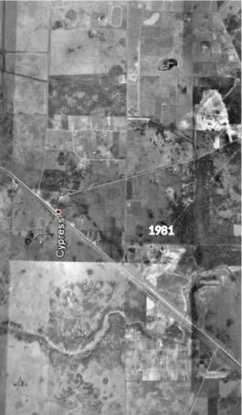
  • Kane writes to Bickford proposing a landowner committee to govern the airstrip (1982)
  • Declaration of Condominium filed, establishing three sets of hangarminium buildings (1982)
  • First organizational meeting of Dry Creek Airport Users held June 22, 1983

1979-1984 a

1979-1984 b

1979-1984 c

1979-1984 d

1985
1985–1989 — Hangar Development
  • Cypress Corporation files Declaration of Dry Creek Hangar Condominiums (1985)
  • Kane sells two lots to Joe Corr; Corr builds hangar (1989)
  • John Kane departs Dry Creek after the passing of his wife; later moves to Austin and passes away November 17, 2012, at age 90

1985-1989 a

1985-1989 b

1985-1989 c

1990
1990–1992 — SRACA Founded
  • Dry Creek property owners meet; John Kane proposes converting parts of the development to mobile homes and retirement homes, prompting residents to form SRACA
  • The Skinner Road Airport Community Association (SRACA) is formed; Articles of Incorporation filed April 15, 1991
  • SRACA votes to pursue legal action against Kane to block the proposed trailer park development

1990-1992 a

1990-1992 b

1993
1993–1998 — SRACA Takes Control
  • Airport status temporarily changes from private to public use, then reverts to private
  • SRACA gains full control and operation of the airport from the Magnolia Corporation via lawsuit (1996)
  • SRACA purchases Dry Creek Airport runway and 10 acres (1997)

1993-1998 a

1993-1998 b

1993-1998 c

1993-1998 d

1999
1999–2003 — Modernization
  • Runway regraded and re-grassed — operational in under six weeks (1999)
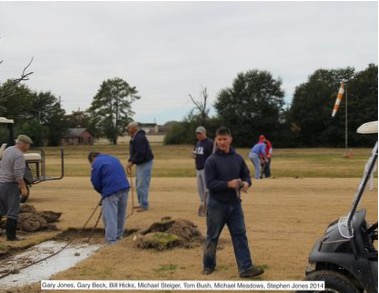
  • Irrigation system, water well, and pond installed (2001)
  • Fuel tank, runway lights, and well pump house added; fuel co-op formed (2001)
  • Dry Creek Drive hard-surfaced (2001)
  • Pole barn constructed and tractor purchased (2003)
  • Settlement with Riata Ranch developers releases them from Deed Restrictions (2003)
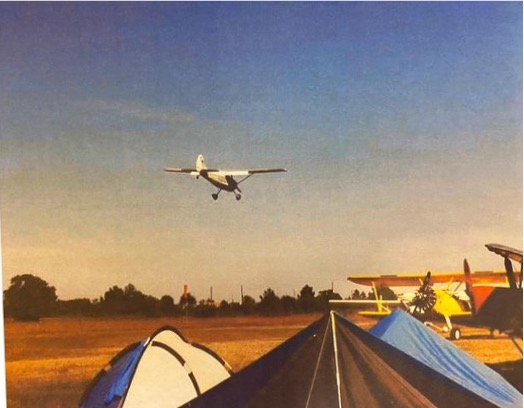
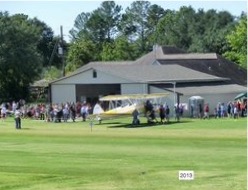
  • First annual open house held for neighbors and friends, September 13, 2003
  • Robert Irwin flies from Dry Creek to Dry Creek — around the world — in his Baron

1999-2003 a

1999-2003 b

1999-2003 c

1999-2003 d

1999-2003 e

2004
2004–2010 — Infrastructure Upgrades
  • East-side fence along Dry Creek Drive constructed (2004)
  • Rotating beacon added (2005)
  • Cul-de-sac built (2005)
  • Instrument approach becomes operational (2007)

2004-2010 a

2004-2010 b

2004-2010 c

2004-2010 d

2011
2011–2013 — Safety Improvements
  • PAPI system installed on Runway 18 (2013)
  • Second instrument approach established (2013)

2011-2013 a

2011-2013 b

2011-2013 c

2011-2013 d

2014
2014–2016 — Floods & Milestones
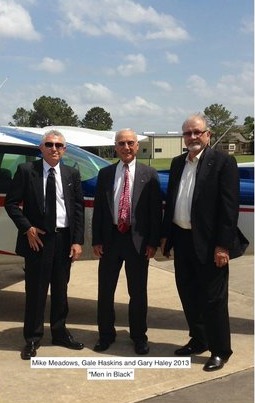
  • Louise Bickford (2014) and Gale Haskins (2015) fly West — remembered fondly by the community
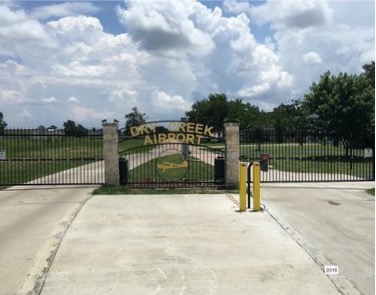
  • New runway lights installed and new gate added on Skinner Court (2016)
  • Dry Creek experiences two 500-year flood events (2016)
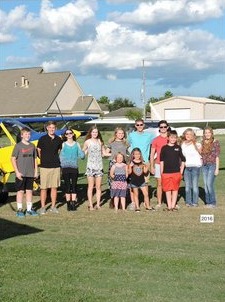
  • Matthew Young (2015) and Ryan Young (2016) earn private pilot certificates

2014-2016 a

2014-2016 b

2014-2016 c

2014-2016 d

2014-2016 e

2014-2016 f

2017
2017–2019 — Harvey & New Pilots
  • Pond improvements completed (2017)
  • New rotating beacon installed (2017)
  • Hurricane Harvey — a 500-year flood event — strikes the Houston area (2017)
  • Lauren Jones (2018), Caitlin Bush (2018), and Trey Bush (2019) earn private pilot certificates
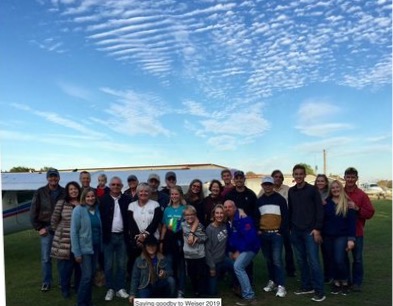
  • Weiser Airport officially closes November 3, 2019

2017-2019 a

2017-2019 b

2017-2019 c

2017-2019 d

2017-2019 e

2017-2019 f

The Founders

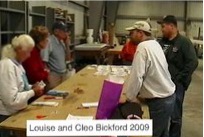
Cleo & Louise Bickford

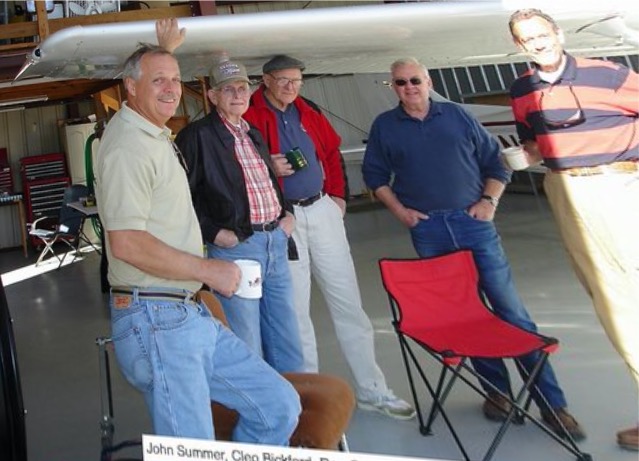
Cleo Myrl Bickford was born December 7, 1924, in Indianola, Oklahoma, and was a lifelong resident of the Houston area. He served in WWII as a radio operator on a B-17, stationed in England with the 398th Bomb Group of the U.S. 8th Air Force. After the war he earned a Mechanical Engineering degree from the University of Houston, served again during the Korean War, and retired from the Air National Guard at Ellington as a Major.

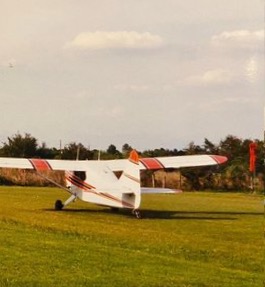
Cleo spent 34+ years at Anderson-Greenwood, where the highlight of his career was designing the high-performance Aries T250 aircraft. A devoted Cessna 170 enthusiast, he helped found the International Cessna 170 Association in 1969, designed its logo, and authored The Cessna 170 Book.

Louise shared Cleo’s passion for aviation, earned her pilot’s license, and flew with the Ninety-Nines and the Cessna 170 Association. Together they owned N1821C and N4620C — both Cessna 170Bs — and the serial-number-1 prototype of the Aries T250.

Together, Cleo and Louise co-founded Dry Creek Airport in 1969. Cleo passed away November 20, 2010; Louise on March 11, 2014.

John Kane

John Kane was born August 22, 1922, in New Orleans, Louisiana, with a love of flying from an early age. He studied Mechanical Engineering at Tulane University and Electrical Engineering at Delgado Trade School, and in 1942 served as a flight instructor before entering the U.S. Army in 1944.

After the war John returned to Houston, where he flew corporate aircraft and worked as an oil broker and real estate developer. He founded the Houston Antique Airplane Association while at Dry Creek, and his passion for vintage aircraft shaped the character of the community.

John co-founded Dry Creek Airport with Cleo Bickford in 1969, purchasing adjacent lots and obtaining FAA private airport approval in 1970. He passed away November 17, 2012, at age 90.